Serving Albuquerque & Surrounding Communities
Appliance Repair Albuquerque | Washers, Dryers, Refrigerators & More
Fast, professional appliance repair for washers, dryers, refrigerators, dishwashers, ovens, ranges, cooktops, freezers, ice makers, and microwaves. Accurate diagnosis, honest recommendations, and quality service for many major appliance brands.
- ✓ Professional Diagnosis
- ✓ Major Appliance Brands Serviced
- ✓ Honest Repair Recommendations
- ✓ Local Albuquerque Service
- ✓ Residential Appliance Specialists
- ✓ Convenient Scheduling
Why Homeowners Trust Our Appliance Repair Service
When your appliance stops working, you don't just need someone who can replace a part—you need someone who can accurately diagnose the problem and recommend the right solution.
That's why homeowners throughout Albuquerque trust professional appliance repair when their refrigerator stops cooling, their washer won't spin, their dryer won't heat, or their dishwasher refuses to drain.
Our approach focuses on solving the actual problem instead of making assumptions.
Our Goal
We believe appliance repair should be based on education, honesty, and accurate diagnosis.
Many appliance failures look much worse than they actually are.
Other problems may appear minor but indicate a larger issue that should be addressed before additional damage occurs.
That's why every repair starts with understanding what your appliance is actually trying to tell us.
What You'll Find On This Page
Instead of giving you a few generic paragraphs about appliance repair, we've created one of the most comprehensive appliance repair resources available.
Below you'll find detailed sections covering:
• Washer Repair
• Dryer Repair
• Refrigerator Repair
• Dishwasher Repair
• Oven & Range Repair
• Freezer Repair
• Ice Maker Repair
• Microwave Repair
• Major Appliance Brands
• Repair vs. Replace Guidance
• Appliance Maintenance Tips
• Frequently Asked Questions
Whether you're trying to understand what's wrong with your appliance or you're ready to schedule professional repair, this page is designed to help you find the answers you're looking for.
Continue Below
Use the Appliance Navigation section below to jump directly to the appliance you need help with, or continue reading to learn more about professional appliance repair throughout Albuquerque.
Appliance Repair Overview
Appliance Repair Albuquerque
Professional Appliance Repair for the Appliances You Depend On Every Day
Household appliances are some of the hardest-working systems in your home. Most of us don't think much about them until something suddenly stops working. One day your refrigerator isn't keeping food cold, your washer won't drain, your dryer takes three cycles to dry a load of towels, or your dishwasher finishes a cycle with dirty dishes still inside.
When that happens, it's natural to wonder:
- Is this something simple?
- Can it be repaired?
- Is it worth repairing?
- Should I replace it instead?
- What is actually causing the problem?
Those are exactly the questions this guide was created to answer.
Whether you're dealing with a minor inconvenience or a complete appliance failure, understanding the problem is the first step toward making a smart repair decision.
Why Professional Appliance Diagnosis Matters
Many appliance problems produce similar symptoms.
For example:
A washer that won't spin could be caused by a worn drive belt, a faulty lid switch, an unbalanced load, a motor problem, or an electronic control issue.
A refrigerator that isn't cooling could involve dirty condenser coils, a failed evaporator fan, a thermostat problem, a compressor issue, or several other possibilities.
We Repair Many Types of Household Appliances
Modern homes depend on a wide variety of appliances every single day.
This guide covers many of the most common residential appliances, including:
- Washers
- Dryers
- Refrigerators
- Dishwashers
- Ovens
- Ranges
- Cooktops
- Microwaves
- Freezers
- Ice Makers
Each appliance has its own dedicated chapter later on this page, where you'll find detailed troubleshooting information, maintenance tips, frequently asked questions, and guidance on deciding whether repair makes sense.
Common Reasons Homeowners Call for Appliance Repair
Although every appliance is different, many service calls begin with similar symptoms.
Some of the most common include:
Appliance Won't Turn On
An appliance that suddenly refuses to start may have an electrical issue, a failed control component, a damaged switch, or another internal failure that requires proper diagnosis.
Strange Noises
Grinding.
Clicking.
Buzzing.
Squealing.
Knocking.
These sounds often indicate worn mechanical components, loose parts, failing motors, or other developing issues.
Water Leaks
Many leaks originate from hoses, pumps, door seals, drain systems, or water supply connections.
Heating Problems
Heating issues commonly affect:
- Dryers
- Ovens
- Ranges
- Cooktops
- Microwaves
Loss of heat may result from failed heating elements, igniters, thermostats, sensors, relays, or electronic controls.
Cooling Problems
Common symptoms include:
- Refrigerator warm
- Freezer thawing
- Inconsistent temperatures
- Frost buildup
- Constant running
Prompt diagnosis helps prevent additional food loss and possible damage to the appliance.
Error Codes
Many newer appliances display diagnostic codes.
Why Appliances Fail
Appliances experience thousands of operating cycles throughout their lifetime.
Over time, components naturally wear.
Common causes include:
- Mechanical wear
- Electrical failures
- Water damage
- Heat damage
- Motor wear
- Control board failures
- Sensors
- Switches
- Bearings
- Pumps
- Belts
- Igniters
- Compressors
- Door seals
- User wear and tear
Regular maintenance can often extend appliance life, but eventually every appliance reaches a point where repairs become necessary.
Repair Before You Replace
Later in this guide you'll find an in-depth Repair vs. Replace section explaining the factors professionals typically consider before making recommendations.
The correct decision depends on the age of the appliance, the nature of the failure, replacement part availability, repair history, and the overall condition of the unit.
Continue to the Appliance Guides
Below you'll find detailed chapters covering each major household appliance individually.
Each chapter includes:
- Common problems
- Possible causes
- Repair considerations
- Maintenance recommendations
- Brand information
- Frequently asked questions
- Professional repair guidance
If you're looking for information about a specific appliance, use the navigation above or continue to the Washer Repair chapter below, where we begin our comprehensive appliance repair guides.
Washer Repair
Washer Repair
Expert Washer Repair for Front Load, Top Load & High-Efficiency Washing Machines
Our Albuquerque appliance repair technicians provide fast, reliable washer repair for all major brands. A washing machine is one of the most frequently used appliances in any home, and when it stops working properly, laundry quickly piles up and what begins as a small inconvenience can become a major disruption to your daily routine.
Whether your washer won't spin, won't drain, won't start, leaks water across the floor, or begins making unusual noises, identifying the actual cause of the problem is the first step toward restoring reliable operation.
Modern washing machines contain a combination of mechanical, electrical, and electronic components that must all work together correctly. While many different problems can produce similar symptoms, accurate diagnosis helps determine which component has actually failed.
If your washer has recently begun acting differently, this guide will help you understand many of the most common problems homeowners experience and when professional repair may be the most practical solution.
Typical Lifespan
10–15 years
General expectation, not a guarantee.
Common Problems We See
- Door lock failures
- Drain pump problems
- Excessive vibration
- Spin cycle problems
Jump to a Washer Problem
- Washer Won't Spin
- Washer Won't Drain
- Washer Won't Fill With Water
- Washer Won't Start
- Washer Leaking Water
- Washer Making Loud Noises
- Washer Vibrating Excessively
- Washer Stops Mid Cycle
- Washer Smells Bad
- Washer Door Won't Unlock
- Washer Error Codes
- Washer Brands We Repair
- Repair vs Replace
- Washer Maintenance Tips
- Washer FAQs
Types of Washers We Repair
Modern homes use several different styles of washing machines, each with its own design, components, and common repair issues.
Front Load Washers
Front load washers are known for their water efficiency and excellent cleaning performance. They also contain more complex door seals, suspension systems, and electronic controls than many older machines.
Common issues include:
- Door lock failures
- Drain pump problems
- Mold around door gasket
- Excessive vibration
- Water leaks
- Spin cycle problems
Top Load Washers
Top load machines remain one of the most common residential washing machines.
Typical repairs may involve:
- Lid switch failures
- Agitator problems
- Drive belt wear
- Drain pump issues
- Motor couplers
- Suspension rods
High-Efficiency (HE) Washers
HE washers use less water while relying heavily on electronic sensors and control systems.
Common issues include:
- Balance errors
- Drain problems
- Sensor failures
- Control board issues
- Error codes
- Long cycle times
Stackable Washers
Stacked laundry units save space but can sometimes require additional labor during repairs due to limited accessibility.
These units often share many of the same repair concerns as standard front-load washers.
Washer Won't Spin
For detailed troubleshooting and professional repair for washer won't spin, call (505) 933-6637.
Washer Won't Drain
For detailed troubleshooting and professional repair for washer won't drain, call (505) 933-6637.
Washer Won't Fill With Water
For detailed troubleshooting and professional repair for washer won't fill with water, call (505) 933-6637.
Washer Won't Start
For detailed troubleshooting and professional repair for washer won't start, call (505) 933-6637.
Washer Leaking Water
For detailed troubleshooting and professional repair for washer leaking water, call (505) 933-6637.
Washer Making Loud Noises
For detailed troubleshooting and professional repair for washer making loud noises, call (505) 933-6637.
Washer Vibrating Excessively
For detailed troubleshooting and professional repair for washer vibrating excessively, call (505) 933-6637.
Washer Stops Mid Cycle
For detailed troubleshooting and professional repair for washer stops mid cycle, call (505) 933-6637.
Washer Smells Bad
For detailed troubleshooting and professional repair for washer smells bad, call (505) 933-6637.
Washer Door Won't Unlock
For detailed troubleshooting and professional repair for washer door won't unlock, call (505) 933-6637.
Washer Error Codes
For detailed troubleshooting and professional repair for washer error codes, call (505) 933-6637.
Repair vs Replace
For detailed troubleshooting and professional repair for repair vs replace, call (505) 933-6637.
Washer Maintenance Tips
For detailed troubleshooting and professional repair for washer maintenance tips, call (505) 933-6637.
Washer FAQs
For detailed troubleshooting and professional repair for washer faqs, call (505) 933-6637.
Dryer Repair
Dryer Repair
Professional Dryer Repair for Gas & Electric Dryers
Our Albuquerque appliance repair technicians provide fast, reliable dryer repair for gas and electric dryers. A clothes dryer may seem like a simple appliance, but modern dryers rely on dozens of mechanical, electrical, and electronic components working together to dry clothing safely and efficiently.
When one of those components fails, the results are often obvious.
Your clothes stay wet.
Drying cycles become longer.
The dryer stops heating.
The drum won't turn.
Or the appliance simply refuses to start.
If you're experiencing any of these problems, understanding the possible causes is the first step toward determining whether professional repair is the right solution.
This guide explains many of the most common dryer problems, what may be causing them, and when it's time to schedule appliance repair.
Typical Lifespan
10–15 years
General expectation, not a guarantee.
Common Problems We See
- Heating element failures
- Thermal fuse replacement
- Motor failures
- Control board issues
Jump to a Dryer Problem
- Dryer Won't Heat
- Dryer Won't Start
- Dryer Drum Won't Turn
- Dryer Takes Too Long to Dry
- Dryer Overheating
- Dryer Making Loud Noises
- Dryer Burning Smell
- Dryer Stops Mid-Cycle
- Dryer Error Codes
- Dryer Brands We Repair
- Repair vs Replace
- Dryer Maintenance Tips
- Dryer FAQs
Types of Dryers We Repair
Dryers may appear similar from the outside, but several different designs are commonly found in residential homes.
Understanding the type of dryer you own can help explain certain repair issues.
Electric Dryers
Electric dryers use heating elements to generate the warm air needed for drying clothes.
Common repairs include:
- Heating element failures
- Thermal fuse replacement
- High-limit thermostat problems
- Control board issues
- Motor failures
- Drum support components
Gas Dryers
Gas dryers produce heat using an igniter and gas burner assembly.
Common issues include:
- Failed igniters
- Gas valve coils
- Flame sensors
- Burner assembly problems
- Thermostat failures
- Electronic controls
Stackable Dryers
Stacked laundry systems save valuable floor space but often require additional care during servicing because of limited accessibility.
Mechanically, many stackable dryers share components with standard residential units.
Ventless Dryers
Ventless dryers use different drying technologies than traditional vented dryers.
Common concerns include:
- Moisture removal
- Condenser maintenance
- Sensor failures
- Air circulation issues
Dryer Won't Heat
For detailed troubleshooting and professional repair for dryer won't heat, call (505) 933-6637.
Dryer Won't Start
For detailed troubleshooting and professional repair for dryer won't start, call (505) 933-6637.
Dryer Drum Won't Turn
For detailed troubleshooting and professional repair for dryer drum won't turn, call (505) 933-6637.
Dryer Takes Too Long to Dry
For detailed troubleshooting and professional repair for dryer takes too long to dry, call (505) 933-6637.
Dryer Overheating
For detailed troubleshooting and professional repair for dryer overheating, call (505) 933-6637.
Dryer Making Loud Noises
For detailed troubleshooting and professional repair for dryer making loud noises, call (505) 933-6637.
Dryer Burning Smell
For detailed troubleshooting and professional repair for dryer burning smell, call (505) 933-6637.
Dryer Stops Mid-Cycle
For detailed troubleshooting and professional repair for dryer stops mid-cycle, call (505) 933-6637.
Dryer Error Codes
For detailed troubleshooting and professional repair for dryer error codes, call (505) 933-6637.
Repair vs Replace
For detailed troubleshooting and professional repair for repair vs replace, call (505) 933-6637.
Dryer Maintenance Tips
For detailed troubleshooting and professional repair for dryer maintenance tips, call (505) 933-6637.
Dryer FAQs
For detailed troubleshooting and professional repair for dryer faqs, call (505) 933-6637.
Refrigerator Repair
Refrigerator Repair
Professional Refrigerator Repair for Cooling Problems, Ice Makers, Water Leaks & More
We provide professional refrigerator repair throughout Albuquerque and surrounding communities. Your refrigerator is one of the few appliances in your home that operates around the clock, and because it runs 24 hours a day, even a minor problem can quickly become a major inconvenience.
Whether your refrigerator has stopped cooling, is leaking water, making unusual noises, constantly running, or producing ice maker problems, identifying the true cause of the issue is the first step toward deciding whether professional repair is the right solution.
Modern refrigerators are sophisticated appliances that combine refrigeration systems, electronic controls, sensors, fans, compressors, water systems, and defrost components.
Because many different failures can create similar symptoms, professional diagnosis helps identify the actual source of the problem before unnecessary parts are replaced.
Typical Lifespan
10–20 years
General expectation, not a guarantee.
Common Problems We See
- Cooling issues
- Ice maker failures
- Water dispenser problems
- Evaporator fan issues
Jump to a Refrigerator Problem
- Refrigerator Not Cooling
- Freezer Cold But Refrigerator Warm
- Refrigerator Leaking Water
- Ice Maker Not Working
- Water Dispenser Problems
- Refrigerator Running Constantly
- Frost Build-Up
- Refrigerator Making Loud Noises
- Refrigerator Too Warm
- Refrigerator Too Cold
- Refrigerator Error Codes
- Refrigerator Brands We Repair
- Repair vs Replace
- Refrigerator Maintenance Tips
- Refrigerator FAQs
Types of Refrigerators We Repair
Modern homes use several refrigerator styles, each with unique components and repair considerations.
French Door Refrigerators
French door refrigerators combine large fresh-food compartments with lower freezer drawers and often include advanced electronic controls.
Common repairs include:
- Cooling issues
- Ice maker failures
- Water dispenser problems
- Evaporator fan issues
- Electronic control failures
Side-by-Side Refrigerators
Side-by-side units remain popular because of their convenient layout.
Common service calls include:
- Ice maker failures
- Water dispenser problems
- Cooling imbalance
- Frost buildup
- Defrost system repairs
Top Freezer Refrigerators
Traditional top freezer models remain among the most reliable refrigerator designs.
Common repairs include:
- Thermostat failures
- Defrost issues
- Door gasket replacement
- Fan motor failures
- Compressor problems
Bottom Freezer Refrigerators
These refrigerators provide convenient access to fresh food while placing frozen storage below.
Repair concerns often include:
- Drawer rail issues
- Defrost problems
- Ice maker failures
- Cooling performance
- Drain system problems
Built-In Refrigerators
Built-in refrigeration systems often include premium features and specialized components.
These units typically require careful diagnosis due to their more complex design.
Refrigerator Not Cooling
For detailed troubleshooting and professional repair for refrigerator not cooling, call (505) 933-6637.
Freezer Cold But Refrigerator Warm
For detailed troubleshooting and professional repair for freezer cold but refrigerator warm, call (505) 933-6637.
Refrigerator Leaking Water
For detailed troubleshooting and professional repair for refrigerator leaking water, call (505) 933-6637.
Ice Maker Not Working
For detailed troubleshooting and professional repair for ice maker not working, call (505) 933-6637.
Water Dispenser Problems
For detailed troubleshooting and professional repair for water dispenser problems, call (505) 933-6637.
Refrigerator Running Constantly
For detailed troubleshooting and professional repair for refrigerator running constantly, call (505) 933-6637.
Frost Build-Up
For detailed troubleshooting and professional repair for frost build-up, call (505) 933-6637.
Refrigerator Making Loud Noises
For detailed troubleshooting and professional repair for refrigerator making loud noises, call (505) 933-6637.
Refrigerator Too Warm
For detailed troubleshooting and professional repair for refrigerator too warm, call (505) 933-6637.
Refrigerator Too Cold
For detailed troubleshooting and professional repair for refrigerator too cold, call (505) 933-6637.
Refrigerator Error Codes
For detailed troubleshooting and professional repair for refrigerator error codes, call (505) 933-6637.
Repair vs Replace
For detailed troubleshooting and professional repair for repair vs replace, call (505) 933-6637.
Refrigerator Maintenance Tips
For detailed troubleshooting and professional repair for refrigerator maintenance tips, call (505) 933-6637.
Refrigerator FAQs
For detailed troubleshooting and professional repair for refrigerator faqs, call (505) 933-6637.
Dishwasher Repair
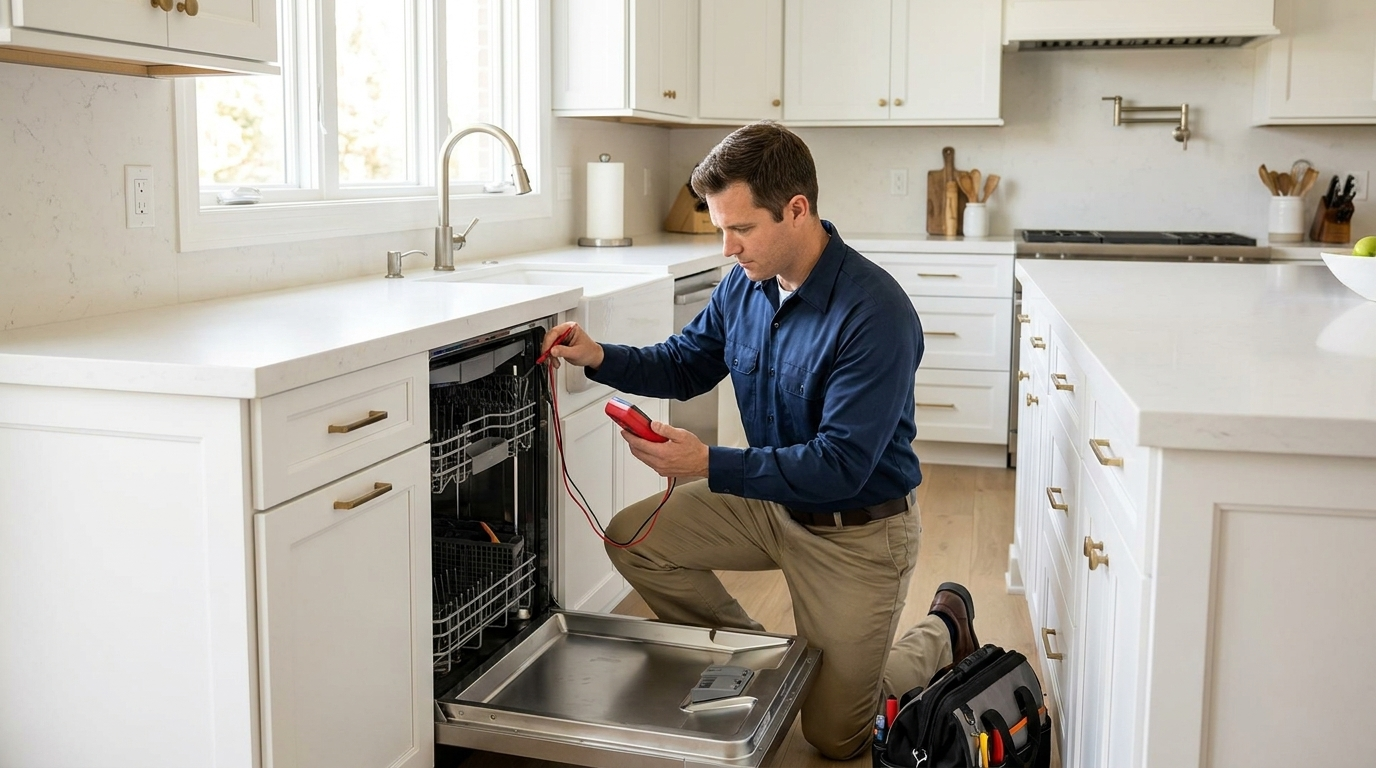
Dishwasher Repair
Professional Dishwasher Repair for Cleaning Problems, Drain Issues, Leaks & More
Our Albuquerque dishwasher repair technicians help homeowners restore their appliances quickly. A dishwasher is designed to make life easier by saving time, water, and effort, but when it stops cleaning dishes properly, refuses to drain, leaks onto the kitchen floor, or won't start at all, it can quickly become one of the most frustrating appliances in your home.
Modern dishwashers are far more advanced than many homeowners realize. They rely on pumps, motors, heating elements, sensors, electronic controls, water valves, spray arms, and drainage systems all working together throughout every wash cycle.
When one of these components fails, the symptoms are often easy to notice—but the actual cause isn't always obvious.
Whether your dishwasher won't drain, isn't cleaning dishes, leaks water, makes unusual noises, or displays an error code, understanding the possible causes is the first step toward deciding whether professional repair is the right solution.
Typical Lifespan
9–12 years
General expectation, not a guarantee.
Common Problems We See
- Dishwasher Won't Drain
- Dishwasher Not Cleaning Dishes
- Dishwasher Leaking Water
- Dishwasher Won't Start
Jump to a Dishwasher Problem
- Dishwasher Won't Start
- Dishwasher Won't Drain
- Dishwasher Not Cleaning Dishes
- Dishwasher Leaking Water
- Dishwasher Not Drying
- Dishwasher Stops Mid-Cycle
- Dishwasher Making Loud Noises
- Dishwasher Door Won't Latch
- Dishwasher Error Codes
- Dishwasher Brands We Repair
- Repair vs Replace
- Dishwasher Maintenance Tips
- Dishwasher FAQs
Types of Dishwashers We Repair
Today's homes use several different dishwasher designs, each with its own repair considerations.
Built-In Dishwashers
Built-in dishwashers remain the most common residential style.
Typical repair concerns include:
- Drain pump failures
- Circulation pump issues
- Heating element problems
- Door latch failures
- Water inlet valve issues
- Electronic controls
Portable Dishwashers
Portable units connect temporarily to a kitchen faucet and offer flexibility where permanent installation isn't practical.
Common repairs involve:
- Water connection issues
- Drain problems
- Pump failures
- Electrical controls
Drawer Dishwashers
Drawer-style dishwashers provide convenient loading while using unique drawer mechanisms and control systems.
Common repairs include:
- Drawer seal problems
- Drainage issues
- Control board faults
- Pump failures
Compact Dishwashers
Compact units often share many of the same components as standard dishwashers while fitting into smaller kitchens.
Repair procedures remain similar despite the smaller footprint.
Dishwasher Won't Start
For detailed troubleshooting and professional repair for dishwasher won't start, call (505) 933-6637.
Dishwasher Won't Drain
For detailed troubleshooting and professional repair for dishwasher won't drain, call (505) 933-6637.
Dishwasher Not Cleaning Dishes
For detailed troubleshooting and professional repair for dishwasher not cleaning dishes, call (505) 933-6637.
Dishwasher Leaking Water
For detailed troubleshooting and professional repair for dishwasher leaking water, call (505) 933-6637.
Dishwasher Not Drying
For detailed troubleshooting and professional repair for dishwasher not drying, call (505) 933-6637.
Dishwasher Stops Mid-Cycle
For detailed troubleshooting and professional repair for dishwasher stops mid-cycle, call (505) 933-6637.
Dishwasher Making Loud Noises
For detailed troubleshooting and professional repair for dishwasher making loud noises, call (505) 933-6637.
Dishwasher Door Won't Latch
For detailed troubleshooting and professional repair for dishwasher door won't latch, call (505) 933-6637.
Dishwasher Error Codes
For detailed troubleshooting and professional repair for dishwasher error codes, call (505) 933-6637.
Repair vs Replace
For detailed troubleshooting and professional repair for repair vs replace, call (505) 933-6637.
Dishwasher Maintenance Tips
For detailed troubleshooting and professional repair for dishwasher maintenance tips, call (505) 933-6637.
Dishwasher FAQs
For detailed troubleshooting and professional repair for dishwasher faqs, call (505) 933-6637.
Oven, Range & Cooktop
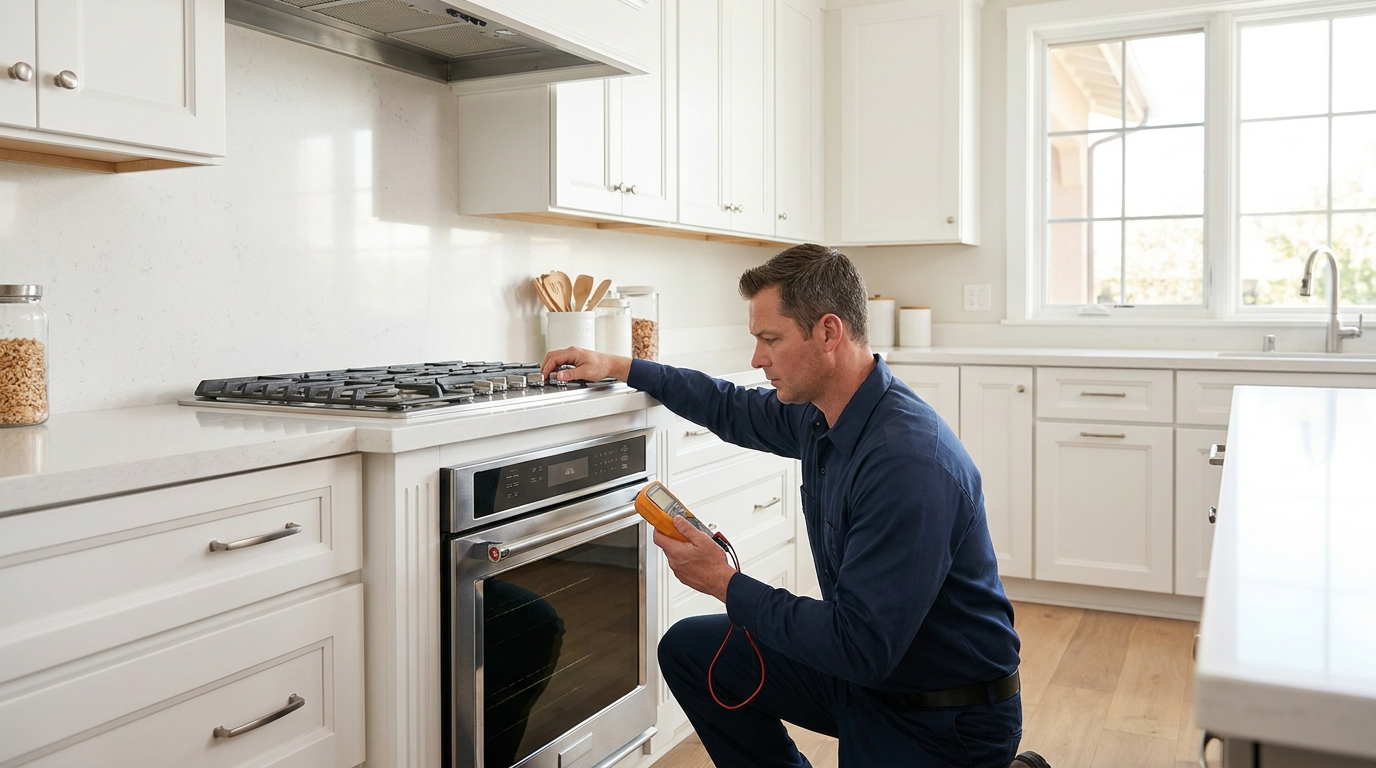
Oven, Range & Cooktop Repair
Professional Oven, Range & Cooktop Repair for Gas & Electric Cooking Appliances
Our Albuquerque oven, range, and cooktop repair technicians keep kitchen appliances working safely. Your cooking appliances are at the heart of your kitchen, and whether you're preparing a quick weekday dinner or hosting a holiday meal, you rely on your oven, range, and cooktop to perform safely and consistently.
When an oven won't heat, a burner won't ignite, a cooktop stops working, or temperatures become unpredictable, even simple meals become difficult to prepare.
Modern cooking appliances combine heating elements, gas systems, electronic controls, sensors, igniters, thermostats, relays, and safety devices into one highly integrated system. While the symptoms are often obvious, identifying the actual cause requires a systematic approach.
This guide explains many of the most common oven, range, and cooktop problems homeowners experience and when professional repair may be the most practical solution.
Typical Lifespan
13–18 years
General expectation, not a guarantee.
Common Problems We See
- Heating elements
- Temperature sensors
- Bake and broil failures
- Electronic controls
Jump to a Cooking Appliance Problem
- Oven Won't Heat
- Oven Not Heating Evenly
- Burner Won't Ignite
- Electric Burner Not Heating
- Glass Cooktop Cracked
- Oven Door Won't Close
- Oven Temperature Incorrect
- Control Panel Not Working
- Self-Clean Problems
- Cooking Appliance Error Codes
- Brands We Repair
- Repair vs Replace
- Maintenance Tips
- Frequently Asked Questions
Types of Cooking Appliances We Repair
Today's kitchens include several different cooking appliance configurations.
Electric Ovens
Electric ovens provide dependable, even heating but rely on multiple electrical components working together correctly.
Common repairs include:
- Heating elements
- Temperature sensors
- Electronic controls
- Bake and broil failures
- Door latch assemblies
Gas Ovens
Gas ovens use burners and igniters to generate heat.
Common service calls include:
- Igniter replacement
- Burner ignition problems
- Gas valve issues
- Temperature regulation
- Safety control failures
Electric Ranges
Electric ranges combine oven functions with surface heating elements.
Typical repairs include:
- Surface burners
- Infinite switches
- Control boards
- Heating elements
- Wiring repairs
Gas Ranges
Gas ranges require proper ignition, burner operation, and flame regulation.
Common issues include:
- Burners failing to light
- Weak flames
- Clicking igniters
- Gas valve problems
- Burner head blockages
Glass & Induction Cooktops
Modern cooktops provide precise cooking performance but contain sophisticated electronic controls.
Repairs often involve:
- Heating zones
- Touch controls
- Power modules
- Surface damage
- Temperature sensors
Continue to Part 2
The Cooking Appliance Repair chapter continues below with:
- Oven Won't Heat
- Oven Temperature Problems
- Burner Problems
- Cooktop Problems
- Control Panel Issues
- Error Codes
- Brands We Repair
- Repair vs. Replace
- Maintenance Tips
- Frequently Asked Questions
- Schedule Cooking Appliance Repair
- Return to Appliance Navigation
Oven Won't Heat
One of the most common cooking appliance problems homeowners experience is an oven that simply refuses to heat.
Sometimes the display appears normal while the interior never reaches cooking temperature. In other cases, the oven may heat only partially or fail completely.
Common Symptoms
- Oven stays cold.
- Bake cycle starts but never heats.
- Broiler works but bake does not.
- Preheating takes an unusually long time.
- Food never cooks properly.
Possible Causes
Common causes include:
- Failed bake element
- Defective igniter
- Temperature sensor failure
- Electronic control board
- Thermal fuse
- Wiring problems
- Relay failure
Because electric and gas ovens use different heating systems, accurate diagnosis begins by identifying the appliance type before testing individual components.
Professional Recommendation
An oven that consistently fails to heat should be professionally diagnosed before replacement parts are installed.
Several different components can create identical symptoms.
Oven Temperature Incorrect
Sometimes an oven heats, but not to the correct temperature.
This often becomes noticeable when recipes suddenly require much longer cooking times or food begins overcooking without explanation.
Common Symptoms
- Food cooks unevenly.
- Baking times become inconsistent.
- Oven appears hotter than selected temperature.
- Oven appears cooler than selected temperature.
- Recipes no longer produce expected results.
Possible Causes
Temperature problems may involve:
- Temperature sensor
- Oven thermostat
- Electronic control
- Heating element
- Igniter performance
- Calibration issues
Even relatively small temperature differences can noticeably affect baking performance.
Burner Won't Ignite
Gas surface burners should ignite quickly and burn with a consistent blue flame.
Failure to ignite properly often indicates contamination or component wear.
Common Symptoms
- Clicking without ignition.
- Weak flame.
- Delayed ignition.
- Burner won't light.
- One burner works while another doesn't.
Possible Causes
Examples include:
- Dirty burner ports
- Igniter failure
- Moisture
- Gas valve issues
- Burner cap misalignment
- Spark module failure
Electric Burner Not Heating
Electric surface burners may stop heating completely or only produce partial heat.
Common Symptoms
- Burner remains cold.
- Burner heats unevenly.
- Burner cycles incorrectly.
- Indicator light works but no heat.
- Surface element only partially heats.
Possible Causes
Possible causes include:
- Surface heating element
- Infinite switch
- Wiring
- Receptacle failure
- Electronic control
- Power supply issues
Proper testing determines whether the heating element itself has failed or another electrical component is responsible.
Glass Cooktop Cracked
Glass cooktops provide an attractive cooking surface but can become damaged by impact or sudden temperature changes.
Common Symptoms
- Visible crack.
- Chipped glass.
- Surface damage.
- Heating problems after impact.
- Sharp edges around damaged area.
Safety Recommendation
A cracked cooktop should be evaluated before continued use.
Depending on the location and severity of the damage, replacement of the cooking surface may be necessary.
Oven Door Won't Close
A properly sealing oven door is essential for maintaining cooking temperatures.
Common Symptoms
- Door remains partially open.
- Heat escapes around the door.
- Door latch feels loose.
- Self-clean will not start.
- Door does not seal properly.
Possible Causes
Common causes include:
- Worn hinges
- Door gasket
- Latch assembly
- Bent door frame
- Self-clean lock mechanism
A properly sealing door improves both cooking performance and energy efficiency.
Control Panel Not Working
Modern cooking appliances rely heavily on electronic controls.
When the control panel becomes unresponsive, the appliance may lose multiple functions.
Common Symptoms
- Blank display.
- Buttons don't respond.
- Flashing display.
- Random beeping.
- Error messages.
Possible Causes
Examples include:
- Electronic control board
- Touchpad failure
- Power supply issues
- Wiring
- Moisture damage
- Software faults
Electronic problems often require systematic diagnosis before replacement components are recommended.
Cooking Appliance Error Codes
Many modern ovens and ranges monitor their own operating systems and display diagnostic codes whenever faults occur.
Common categories include:
- Temperature sensor errors
- Door lock faults
- Communication errors
- Heating element failures
- Fan errors
- Control board faults
Diagnostic codes provide valuable information but should always be confirmed through additional testing.
Continue to Part 3
The Cooking Appliance Repair chapter continues below with:
- Brands We Repair
- Is It Better to Repair or Replace?
- Maintenance Tips
- Frequently Asked Questions
- Schedule Oven, Range & Cooktop Repair
- Return to Appliance Navigation
Cooking Appliance Brands We Repair
Today's cooking appliances vary widely between manufacturers, but many rely on similar systems including heating elements, igniters, temperature sensors, electronic control boards, relays, switches, and safety devices.
We service many of the most common residential cooking appliance brands, including:
- Whirlpool
- KitchenAid
- Maytag
- GE
- GE Profile
- LG
- Samsung
- Frigidaire
- Bosch
- Amana
- Kenmore
- JennAir
- Electrolux
If your manufacturer is not listed above, contact us to confirm service availability for your specific appliance model.
Is It Better to Repair or Replace an Oven or Range?
Cooking appliances often have long service lives, making repair a practical option in many situations.
Before replacing an oven, range, or cooktop, several important factors should be considered.
Age of the Appliance
While older appliances naturally experience wear, many continue providing dependable service after replacing a failed component.
Age alone rarely tells the complete story.
Type of Failure
Some repairs involve relatively inexpensive components such as igniters, heating elements, switches, or sensors.
Others may involve multiple systems or extensive electronic failures.
Accurate diagnosis helps determine which situation you're facing.
Repair History
An appliance that has required very few previous repairs may remain an excellent candidate for professional service.
Conversely, repeated major failures may justify considering replacement.
Parts Availability
Replacement parts remain widely available for many popular cooking appliance brands.
Professional diagnosis helps determine whether quality replacement components are still obtainable for your particular model.
Overall Condition
The condition of the appliance as a whole matters just as much as the current problem.
Professionals evaluate:
- Cabinet condition
- Cooking performance
- Safety
- Previous repairs
- Internal wear
- Expected remaining service life
Looking at the complete appliance often leads to better long-term decisions.
Cooking Appliance Maintenance Tips
Routine maintenance helps many cooking appliances perform more consistently while reducing unnecessary wear.
Homeowner maintenance includes:
- Clean burner ports regularly.
- Wipe spills promptly.
- Keep oven door gaskets clean.
- Inspect burner flames occasionally.
- Avoid harsh abrasives on glass cooktops.
- Clean beneath burner caps.
- Verify ventilation remains unobstructed.
- Watch for unusual smells or noises.
Preventive maintenance often improves both cooking performance and appliance longevity.
Frequently Asked Questions
Why won't my oven heat?
Heating problems commonly involve bake elements, igniters, sensors, thermostats, electronic controls, or related electrical components.
Why won't my gas burner ignite?
Dirty burner ports, faulty igniters, moisture, spark modules, or gas supply issues are among the most common causes.
Can a cracked glass cooktop be repaired?
Minor cosmetic damage differs from structural cracks.
A damaged cooking surface should always be evaluated before continued use.
Why is my oven cooking unevenly?
Uneven cooking may result from temperature sensor problems, heating element issues, airflow concerns, calibration errors, or electronic control faults.
Do you repair both gas and electric cooking appliances?
Yes.
We service many residential gas and electric ovens, ranges, cooktops, and wall ovens from a wide variety of manufacturers.
Schedule Oven, Range & Cooktop Repair in Albuquerque
Whether your oven won't heat, your burners won't ignite, your cooktop has stopped working, or your appliance is displaying unusual error codes, professional diagnosis can help identify the underlying problem and determine the most practical repair solution.
Our goal is to help homeowners throughout Albuquerque restore safe, dependable cooking performance while providing honest recommendations based on the actual condition of the appliance.
Oven Not Heating Evenly
For detailed troubleshooting and professional repair for oven not heating evenly, call (505) 933-6637.
Self-Clean Problems
For detailed troubleshooting and professional repair for self-clean problems, call (505) 933-6637.
Repair vs Replace
For detailed troubleshooting and professional repair for repair vs replace, call (505) 933-6637.
Freezer & Ice Maker
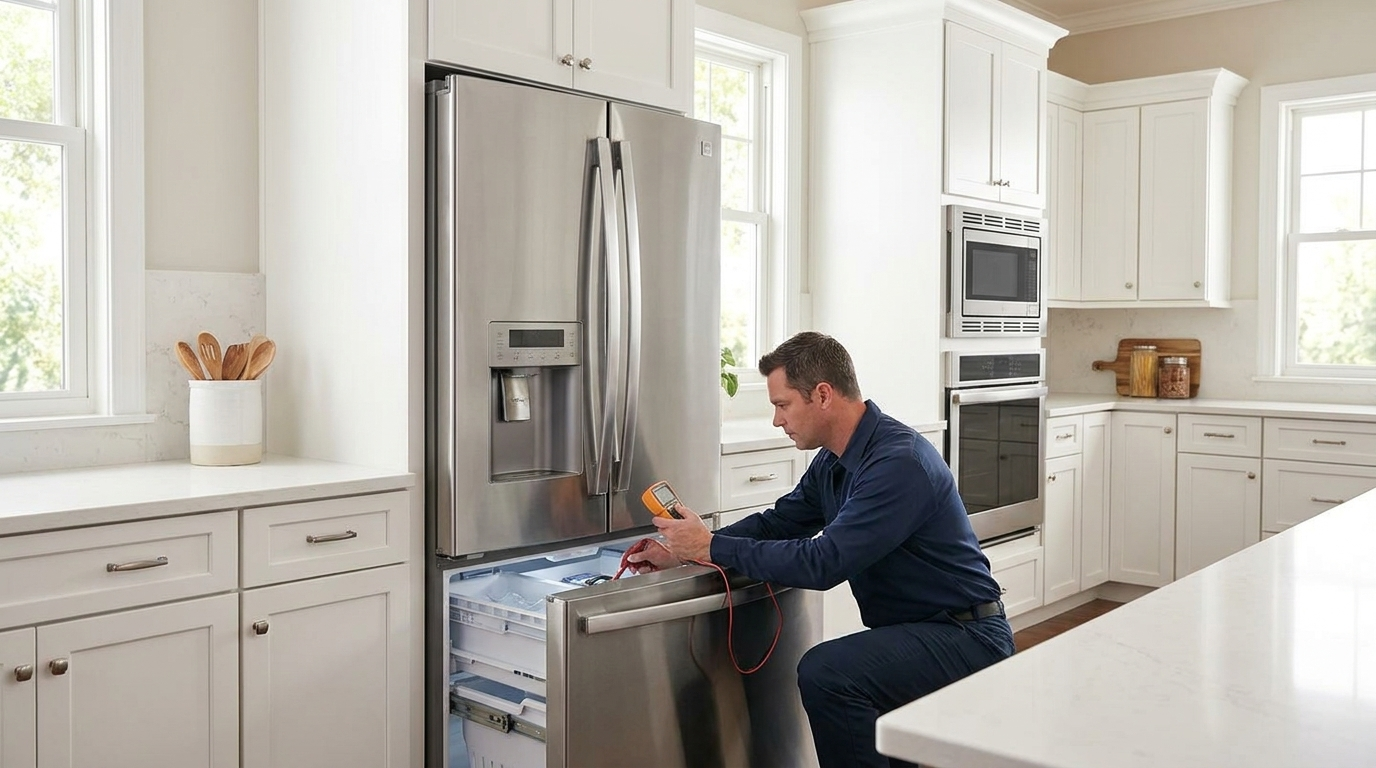
Freezer & Ice Maker Repair
Professional Freezer & Ice Maker Repair for Cooling Problems, Frost Build-Up, Water Leaks & Ice Production Issues
We provide professional freezer and ice maker repair in Albuquerque and the surrounding communities. Your freezer and ice maker play an important role in preserving food and providing reliable ice for everyday use, and when either system stops working properly, the inconvenience can quickly become expensive.
A freezer that won't maintain temperature may allow frozen food to thaw, while an ice maker that suddenly stops producing ice can indicate problems with the refrigerator's water or cooling systems.
Modern freezers and ice makers rely on compressors, evaporator fans, defrost systems, temperature sensors, water valves, electronic controls, and numerous mechanical components working together.
When one component fails, the symptoms are often obvious—but the underlying cause isn't always immediately apparent.
This guide explains many of the most common freezer and ice maker problems homeowners experience and when professional repair is the most practical solution.
Typical Lifespan
11–16 years
General expectation, not a guarantee.
Common Problems We See
- Cooling failures
- Defrost problems
- Door seal replacement
- Fan motor failures
Jump to a Freezer or Ice Maker Problem
- Freezer Not Freezing
- Excessive Frost Build-Up
- Freezer Leaking Water
- Ice Maker Not Making Ice
- Small or Hollow Ice Cubes
- Ice Dispenser Not Working
- Freezer Making Loud Noises
- Freezer Running Constantly
- Error Codes
- Brands We Repair
- Repair vs Replace
- Maintenance Tips
- Frequently Asked Questions
Types of Freezers We Repair
Upright Freezers
Upright freezers offer convenient storage while using many of the same cooling systems found in refrigerators.
Common repairs include:
- Cooling failures
- Defrost problems
- Door seal replacement
- Fan motor failures
- Temperature control issues
Chest Freezers
Chest freezers are valued for long-term frozen food storage.
Common service calls involve:
- Temperature fluctuations
- Compressor issues
- Thermostat failures
- Lid gasket problems
- Drainage concerns
Built-In Freezers
Built-in units often contain premium refrigeration systems and advanced electronic controls.
Professional diagnosis is especially important due to their specialized design.
Ice Maker Systems
Ice makers vary by manufacturer but commonly include:
- Automatic ice makers
- Refrigerator ice makers
- Ice dispensers
- Water dispensers
- Filtered water systems
Each system combines refrigeration, plumbing, and electrical components that must work together properly.
Freezer Not Freezing
A freezer that no longer maintains freezing temperatures requires prompt attention.
Common Symptoms
- Frozen food softening.
- Ice cream melting.
- Temperature rising.
- Compressor running constantly.
- Interior feels cool but not freezing.
Possible Causes
Common causes include:
- Compressor problems
- Evaporator fan failure
- Dirty condenser coils
- Thermostat failure
- Refrigerant issues
- Defrost system faults
- Electronic controls
Prompt diagnosis helps reduce food loss while preventing additional strain on the refrigeration system.
Excessive Frost Build-Up
Heavy frost accumulation usually indicates a problem with the defrost system or warm air entering the freezer.
Common Symptoms
- Thick frost on shelves.
- Frost covering food.
- Ice behind freezer panels.
- Door difficult to close.
- Reduced cooling performance.
Possible Causes
Examples include:
- Defrost heater failure
- Defrost thermostat
- Door gasket leaks
- Defrost timer
- Electronic control failure
- Door left partially open
Heavy frost restricts airflow and reduces cooling efficiency throughout the appliance.
Continue to Part 2
The Freezer & Ice Maker Repair chapter continues below with:
- Freezer Leaking Water
- Ice Maker Not Making Ice
- Ice Dispenser Problems
- Freezer Running Constantly
- Freezer Making Loud Noises
- Error Codes
- Brands We Repair
- Repair vs. Replace
- Maintenance Tips
- Frequently Asked Questions
- Schedule Freezer & Ice Maker Repair
- Return to Appliance Navigation
Freezer Leaking Water
Water around a freezer often surprises homeowners because the appliance is designed to keep moisture frozen.
When water begins collecting underneath or inside the freezer, it usually indicates that the normal defrost or drainage system is no longer functioning correctly.
Common Symptoms
- Water underneath the freezer.
- Water inside the compartment.
- Ice melting onto the floor.
- Water appears after defrost cycles.
- Moisture around the door.
Possible Causes
Water leaks may result from:
- Clogged defrost drain
- Frozen drain tube
- Damaged door gasket
- Condensation issues
- Drain pan problems
- Ice maker plumbing leaks
- Water supply line damage
Because leaks often occur during automatic defrost cycles, the source may not be immediately obvious.
Why Prompt Repair Matters
Ignoring water leaks may lead to:
- Floor damage
- Mold growth
- Cabinet damage
- Ice accumulation
- Reduced appliance efficiency
Early diagnosis often prevents more extensive repairs.
Ice Maker Not Making Ice
An ice maker that suddenly stops producing ice is one of the most common refrigerator-related service calls.
Because ice makers rely on both the refrigeration system and the home's water supply, multiple components can contribute to production problems.
Common Symptoms
- No ice production.
- Ice production extremely slow.
- Empty ice bin.
- Ice maker cycles without producing ice.
- Ice maker overfills or underfills.
Possible Causes
Examples include:
- Frozen water line
- Faulty water inlet valve
- Ice maker assembly failure
- Water filter restriction
- Low water pressure
- Ice level sensor problems
- Temperature issues
- Electronic control faults
Professional diagnosis helps determine whether the problem originates in the water system or the refrigeration system.
Small or Hollow Ice Cubes
Changes in ice cube size often indicate that something within the water delivery system is no longer operating correctly.
Common Symptoms
- Small cubes.
- Hollow cubes.
- Soft ice.
- Misshapen cubes.
- Inconsistent ice production.
Possible Causes
Common causes include:
- Restricted water filter
- Low household water pressure
- Partially blocked water valve
- Frozen water line
- Temperature fluctuations
Small cube production often develops gradually before complete ice maker failure occurs.
Ice Dispenser Not Working
Sometimes the refrigerator continues producing ice while the dispenser itself refuses to operate.
Common Symptoms
- Ice remains in bin.
- Dispenser motor silent.
- Auger not turning.
- Ice jams.
- Dispenser door stuck.
Possible Causes
Examples include:
- Auger motor
- Dispenser switch
- Ice blockage
- Control board
- Door actuator
- Wiring issues
Proper diagnosis determines whether the issue involves the dispenser mechanism or the refrigerator's electronic controls.
Freezer Running Constantly
A freezer that rarely shuts off may be struggling to maintain proper temperature.
Continuous operation often increases energy consumption while placing additional wear on important components.
Common Symptoms
- Compressor runs continuously.
- Appliance never seems to rest.
- Exterior feels unusually warm.
- Cooling performance gradually declines.
Possible Causes
Possible causes include:
- Dirty condenser coils
- Door gasket leaks
- Refrigerant issues
- Thermostat problems
- Defrost system failures
- Fan motor problems
Prompt diagnosis may help reduce unnecessary strain on the refrigeration system.
Freezer Making Loud Noises
While some operating sounds are perfectly normal, new or unusually loud noises often indicate developing mechanical wear.
Common Symptoms
- Grinding.
- Buzzing.
- Clicking.
- Rattling.
- Loud humming.
- Fan noise.
Possible Causes
Noise may originate from:
- Evaporator fan
- Condenser fan
- Compressor
- Ice maker
- Loose panels
- Defrost components
Different sounds frequently provide valuable clues during professional diagnosis.
Freezer & Ice Maker Error Codes
Many modern refrigeration systems monitor internal operation continuously.
Diagnostic codes may indicate problems involving:
- Temperature sensors
- Fan motors
- Ice maker systems
- Defrost components
- Water valves
- Communication faults
- Electronic controls
Although these codes help narrow the diagnosis, additional testing is usually required before replacing components.
Continue to Part 3
The Freezer & Ice Maker Repair chapter continues below with:
- Brands We Repair
- Is It Better to Repair or Replace?
- Maintenance Tips
- Frequently Asked Questions
- Schedule Freezer & Ice Maker Repair
- Return to Appliance Navigation
Freezer & Ice Maker Brands We Repair
Modern freezers and ice makers combine refrigeration technology, electronic controls, water systems, sensors, and mechanical components.
While every manufacturer uses a slightly different design, many common failures involve similar systems that require careful diagnosis before repairs begin.
We service many of today's most popular freezer and refrigerator manufacturers, including:
- Whirlpool
- KitchenAid
- Maytag
- GE
- GE Profile
- LG
- Samsung
- Frigidaire
- Electrolux
- Bosch
- Amana
- Kenmore
- Sub-Zero (where applicable)
If your appliance manufacturer is not listed above, contact us to verify service availability for your specific model.
Is It Better to Repair or Replace a Freezer?
A freezer is often expected to provide many years of dependable service.
When problems develop, replacing the entire appliance isn't always necessary.
Professional diagnosis helps determine whether repair remains the most practical option.
Age of the Appliance
Older appliances naturally experience more wear, but many continue operating reliably after replacing a failed component.
Age should always be considered alongside the appliance's overall condition.
Type of Failure
Some repairs involve relatively straightforward replacement of individual components.
Others involve sealed refrigeration systems or multiple electronic failures.
Understanding the exact problem helps homeowners make informed decisions.
Repair History
A freezer with very few previous repairs may still provide years of reliable operation after servicing.
Repeated major breakdowns may suggest replacement deserves consideration.
Parts Availability
Many common freezer models continue to have replacement parts available for years.
Professional inspection helps determine whether practical repair options remain available.
Overall Condition
Professionals evaluate the appliance as a complete system by considering:
- Cabinet condition
- Cooling performance
- Compressor operation
- Door seals
- Previous repairs
- Expected remaining service life
The decision should always be based on the appliance as a whole rather than one symptom alone.
Freezer & Ice Maker Maintenance Tips
Routine maintenance helps refrigeration systems operate efficiently while reducing unnecessary wear.
Recommended homeowner maintenance includes:
- Clean condenser coils regularly.
- Inspect door gaskets for proper sealing.
- Replace water filters as recommended.
- Keep air vents unobstructed.
- Avoid leaving doors open unnecessarily.
- Listen for new operating noises.
- Remove excessive frost if recommended by the manufacturer.
- Monitor freezer temperature periodically.
Preventive maintenance often helps extend appliance life while improving performance.
Frequently Asked Questions
Why isn't my freezer freezing properly?
Cooling problems may involve the compressor, evaporator fan, thermostat, defrost system, refrigerant system, or electronic controls.
Why is frost building up inside my freezer?
Excessive frost commonly results from defrost system failures, damaged door gaskets, or warm air entering the appliance.
Why did my ice maker stop making ice?
Ice production problems often involve the water supply, inlet valve, temperature, ice maker assembly, or electronic controls.
Is it worth repairing an older freezer?
Many freezers remain excellent repair candidates depending on their overall condition and the nature of the current problem.
Do you repair built-in and premium refrigeration systems?
Yes.
We service many residential refrigeration systems, including numerous built-in and premium models where parts and service are available.
Schedule Freezer & Ice Maker Repair in Albuquerque
If your freezer isn't maintaining temperature, your ice maker has stopped producing ice, you're dealing with water leaks, frost buildup, or unusual operating noises, professional diagnosis can help identify the underlying cause and determine the most practical repair solution.
Our goal is to help homeowners throughout Albuquerque protect their food, restore dependable freezer performance, and resolve ice maker problems through accurate troubleshooting and honest repair recommendations.
Repair vs Replace
For detailed troubleshooting and professional repair for repair vs replace, call (505) 933-6637.
Microwave Repair
Microwave Repair
Professional Microwave Repair for Heating Problems, Sparking, Turntable Issues & Electrical Faults
Our Albuquerque microwave repair technicians help homeowners with heating problems, sparking, and other common microwave issues. Microwave ovens have become one of the most frequently used appliances in modern kitchens, from reheating leftovers to preparing full meals, and they provide fast, convenient cooking every day.
When a microwave suddenly stops heating, begins sparking, makes unusual noises, or refuses to start, it can quickly disrupt your daily routine.
Unlike many other household appliances, microwaves contain high-voltage electrical components that continue storing electricity even after the appliance has been unplugged. Because of this, internal microwave repairs should always be approached with caution.
Whether your microwave won't heat, the turntable has stopped rotating, the display no longer works, or the appliance is displaying an error code, professional diagnosis helps determine the safest and most practical repair solution.
Typical Lifespan
7–10 years
General expectation, not a guarantee.
Common Problems We See
- Heating failures
- Door switch problems
- Turntable issues
- Control panel failures
Jump to a Microwave Problem
- Microwave Won't Heat
- Microwave Won't Turn On
- Microwave Sparking
- Turntable Not Turning
- Microwave Door Problems
- Control Panel Not Working
- Microwave Making Loud Noises
- Microwave Shuts Off During Cooking
- Microwave Error Codes
- Microwave Brands We Repair
- Repair vs Replace
- Maintenance Tips
- Frequently Asked Questions
Types of Microwaves We Repair
Several different microwave configurations are commonly found in residential kitchens.
Countertop Microwaves
Countertop units remain the most popular style because of their affordability and convenience.
Common repairs include:
- Heating failures
- Door switch problems
- Turntable issues
- Control panel failures
- Interior light problems
Over-the-Range Microwaves
These appliances combine microwave cooking with kitchen ventilation.
Common repairs include:
- Exhaust fan failures
- Heating problems
- Display issues
- Door switch failures
- Ventilation controls
Built-In Microwaves
Built-in microwave ovens often include more advanced electronics and integrated cabinetry.
Professional diagnosis is especially important because removal may require partial cabinet disassembly.
Microwave Combination Ovens
Combination microwave ovens combine traditional baking with microwave cooking.
These appliances contain additional heating systems and controls that require systematic troubleshooting.
Microwave Won't Heat
One of the most common microwave problems occurs when the appliance appears to operate normally but food never becomes hot.
Common Symptoms
- Interior light works.
- Turntable rotates.
- Timer counts down.
- Fan runs normally.
- Food remains cold.
Possible Causes
Possible causes include:
- Magnetron failure
- High-voltage diode
- Capacitor problems
- Door switch failure
- Thermal protection device
- Electronic control board
Because several high-voltage components can create identical symptoms, professional diagnosis is recommended before replacing parts.
Microwave Won't Turn On
A microwave that refuses to power on completely may have problems ranging from simple electrical supply issues to failed internal safety components.
Common Symptoms
- Blank display.
- No lights.
- No response from keypad.
- Circuit breaker trips.
- Appliance completely unresponsive.
Possible Causes
Examples include:
- Blown internal fuse
- Door switch problems
- Control board failure
- Power supply issues
- Thermal cutoff
- Wiring faults
Professional testing helps identify the true cause without unnecessary parts replacement.
Continue to Part 2
The Microwave Repair chapter continues below with:
- Microwave Sparking
- Turntable Not Turning
- Door Problems
- Control Panel Issues
- Loud Noises
- Microwave Error Codes
- Brands We Repair
- Repair vs. Replace
- Maintenance Tips
- Frequently Asked Questions
- Schedule Microwave Repair
- Return to Appliance Navigation
Microwave Sparking
A microwave that sparks during operation should never be ignored.
While occasional sparking may result from accidentally placing metal inside the microwave, repeated sparking often indicates damage or component failure that requires professional attention.
Common Symptoms
- Sparks inside the cooking cavity.
- Bright flashes during operation.
- Burning smell.
- Popping sounds.
- Scorch marks inside the microwave.
Possible Causes
Common causes include:
- Metal objects inside the microwave
- Damaged waveguide cover
- Burned interior paint
- Food debris buildup
- Faulty rack supports
- Damaged stirrer components
If sparking continues after removing metal objects and cleaning the interior, discontinue use until the appliance has been inspected.
Turntable Not Turning
The turntable helps distribute microwave energy more evenly during cooking.
When it stops rotating, food may heat unevenly.
Common Symptoms
- Glass tray remains stationary.
- Food cooks unevenly.
- Turntable jerks or slips.
- Grinding sounds beneath the tray.
- Tray rotates inconsistently.
Possible Causes
Possible causes include:
- Turntable motor failure
- Roller guide damage
- Drive coupler wear
- Food obstruction
- Control board issues
Although the microwave may continue heating, uneven cooking performance usually indicates the need for service.
Microwave Door Problems
The microwave door is one of the appliance's most important safety components.
Modern microwaves contain multiple door switches that prevent operation unless the door is fully closed and properly latched.
Common Symptoms
- Door won't latch.
- Microwave won't start.
- Door feels loose.
- Display indicates door error.
- Appliance starts only when door is pushed.
Possible Causes
Examples include:
- Broken door latch
- Worn hinges
- Door switch failure
- Misalignment
- Damaged latch mechanism
Because the door is part of the microwave's safety system, it should never be forced or modified.
Control Panel Not Working
Electronic controls allow homeowners to select cooking times, power levels, and preset cooking programs.
When the control panel becomes unresponsive, the microwave may become unusable.
Common Symptoms
- Buttons don't respond.
- Blank display.
- Flashing display.
- Random beeping.
- Partial keypad failure.
Possible Causes
Common causes include:
- Membrane keypad failure
- Electronic control board
- Moisture intrusion
- Ribbon cable damage
- Power supply issues
Professional testing helps determine whether the problem involves the keypad, electronics, or another electrical component.
Microwave Making Loud Noises
Microwaves normally produce a low humming sound while operating.
Grinding, buzzing, rattling, or unusually loud humming often indicates that something requires attention.
Common Symptoms
- Loud humming.
- Grinding noise.
- Buzzing.
- Vibrating cabinet.
- Rattling during operation.
Possible Causes
Noise may originate from:
- Cooling fan
- Magnetron
- Turntable motor
- High-voltage components
- Loose hardware
- Stirrer motor
Because several electrical components operate simultaneously, identifying the exact source usually requires systematic diagnosis.
Microwave Shuts Off During Cooking
A microwave that begins heating but suddenly shuts off before the timer finishes often indicates an overheating or electrical issue.
Common Symptoms
- Microwave stops unexpectedly.
- Display goes blank.
- Unit restarts after cooling.
- Cooking cycle cancels.
- Appliance becomes very hot.
Possible Causes
Possible causes include:
- Thermal protection device
- Cooling fan failure
- Magnetron overheating
- Electrical supply problems
- Control board faults
Repeated shutdowns should be professionally evaluated before continued use.
Microwave Error Codes
Many modern microwave ovens monitor internal operating systems and display diagnostic codes whenever faults are detected.
Common categories include:
- Door switch errors
- Temperature sensor faults
- Communication errors
- Cooling fan problems
- Control board faults
- Inverter errors
Continue to Part 3
The Microwave Repair chapter continues below with:
- Microwave Brands We Repair
- Is It Better to Repair or Replace?
- Maintenance Tips
- Frequently Asked Questions
- Schedule Microwave Repair in Albuquerque
- Return to Appliance Navigation
Microwave Brands We Repair
Modern microwave ovens vary considerably between manufacturers, but many share similar components including magnetrons, high-voltage systems, door switches, cooling fans, electronic control boards, touch panels, and turntable motors.
We repair many of today's most common residential microwave brands, including:
- Whirlpool
- GE
- LG
- Samsung
- Panasonic
- Sharp
- KitchenAid
- Frigidaire
- Bosch
- Maytag
- Amana
- Kenmore
If your microwave manufacturer is not listed above, contact us to confirm service availability for your specific model.
Is It Better to Repair or Replace a Microwave?
Microwaves are often among the least expensive kitchen appliances to replace, but that doesn't always mean replacement is the best decision.
Many microwave problems involve a single failed component while the remainder of the appliance remains in excellent condition.
Professional diagnosis helps determine whether repair is both practical and cost-effective.
Age of the Appliance
Older microwaves naturally experience wear, but many continue providing dependable service after replacing individual components.
Age alone should never determine whether repair is worthwhile.
Type of Failure
Some repairs involve:
- Door switches
- Turntable motors
- Cooling fans
- Electronic controls
Others may involve high-voltage components or multiple system failures.
Understanding exactly what has failed is the first step toward making an informed repair decision.
Installation Type
Built-in and over-the-range microwaves often represent a greater investment than countertop models.
Because replacement frequently involves cabinetry, mounting hardware, or ventilation systems, repair may offer greater long-term value.
Parts Availability
Replacement parts remain available for many popular microwave models.
Professional diagnosis helps determine whether quality replacement components are still obtainable.
Overall Condition
The appliance should always be evaluated as a complete system.
Professionals consider:
- Heating performance
- Door condition
- Control operation
- Physical condition
- Previous repairs
- Expected remaining service life
This provides a much better basis for deciding between repair and replacement.
Microwave Maintenance Tips
Simple maintenance helps many microwave ovens operate safely while extending their useful life.
Recommended homeowner maintenance includes:
- Keep the interior clean.
- Wipe up food splatter promptly.
- Never operate the microwave when empty.
- Inspect the door seal regularly.
- Avoid slamming the door.
- Clean grease filters on over-the-range models.
- Never place metal inside unless approved by the manufacturer.
- Watch for unusual noises, smells, or sparks.
Preventive maintenance often helps identify developing problems before they become more serious.
Frequently Asked Questions
Why does my microwave run but not heat?
Heating failures commonly involve the magnetron, high-voltage components, door switches, or electronic controls.
Is it safe to use a microwave that sparks?
No.
Repeated sparking should always be investigated before continued operation.
Why won't my microwave start?
Common causes include faulty door switches, blown fuses, control board problems, or electrical supply issues.
Can an over-the-range microwave be repaired?
Yes.
Many over-the-range microwave problems can be professionally diagnosed and repaired depending on the condition of the appliance.
Should I repair or replace my microwave?
The answer depends on the appliance's condition, age, repair history, installation type, and the nature of the current failure.
Professional diagnosis helps determine the most practical solution.
Schedule Microwave Repair in Albuquerque
If your microwave won't heat, won't start, sparks during operation, makes unusual noises, has a damaged door, or displays error codes, professional diagnosis can identify the underlying problem and help determine the safest and most practical repair solution.
Our goal is to help homeowners throughout Albuquerque restore dependable microwave performance while providing honest recommendations based on the actual condition of the appliance.
Repair vs Replace
For detailed troubleshooting and professional repair for repair vs replace, call (505) 933-6637.
Appliance Brands
Appliance Brands We Repair
Professional Repair for Many of Today's Most Popular Appliance Brands
One of the first questions many homeowners ask is:
"Do you repair my brand?"
In most cases, the answer is yes.
While every manufacturer designs appliances a little differently, many use similar mechanical systems, electronic controls, sensors, motors, pumps, compressors, heating elements, and safety devices.
Professional appliance repair requires understanding both the similarities and the unique engineering behind each manufacturer.
Whether your appliance is a dependable workhorse that's been in your home for years or a newer model with advanced electronic controls, proper diagnosis begins with understanding how that specific appliance was designed to operate.
Brands We Commonly Service
We repair many major household appliance manufacturers, including:
- Whirlpool
- Maytag
- KitchenAid
- Amana
- JennAir
- GE
- GE Profile
- Hotpoint
- LG
- Samsung
- Frigidaire
- Electrolux
- Bosch
- Kenmore
- Speed Queen
- Panasonic
- Sharp
- Miele
- Sub-Zero (where applicable)
- Thermador (where applicable)
- Viking (where applicable)
- Wolf (where applicable)
If your manufacturer isn't listed above, contact us to verify service availability for your specific appliance model.
Whirlpool Appliance Repair
Whirlpool appliances remain among the most common household appliances found in Albuquerque homes.
Common Whirlpool repairs include:
- Washer repairs
- Dryer repairs
- Refrigerator cooling problems
- Dishwasher drainage issues
- Oven heating failures
- Ice maker repairs
Because Whirlpool manufactures appliances under several related brands, familiarity with Whirlpool systems often benefits repairs across multiple product lines.
LG Appliance Repair
LG appliances incorporate sophisticated electronic controls and advanced diagnostic systems.
Common LG repairs include:
- Front-load washer repairs
- Refrigerator compressor issues
- Ice maker problems
- Dryer sensor systems
- Dishwasher electronics
- Control board diagnostics
Accurate troubleshooting is especially important before replacing electronic components.
Samsung Appliance Repair
Samsung appliances often combine innovative features with complex electronic systems.
Common service calls include:
- Refrigerator cooling problems
- Ice maker repairs
- Washer balance issues
- Dryer heating failures
- Dishwasher errors
- Display and control issues
Professional diagnosis helps identify whether the problem involves sensors, controls, mechanical components, or multiple systems.
GE Appliance Repair
GE appliances have earned a long-standing reputation in residential kitchens and laundry rooms.
Common repairs include:
- Oven heating problems
- Refrigerator cooling issues
- Washer repairs
- Dryer repairs
- Dishwasher pump failures
- Microwave repairs
Many GE appliances remain highly serviceable when problems are identified early.
Frigidaire Appliance Repair
Frigidaire appliances remain widely used throughout Albuquerque homes.
Common repairs involve:
- Refrigerator cooling
- Freezer frost issues
- Dishwasher performance
- Range repairs
- Oven temperature problems
- Laundry appliances
Routine maintenance combined with timely repairs often extends appliance life considerably.
Bosch Appliance Repair
Bosch appliances are known for quiet operation and premium engineering.
Common Bosch repairs include:
- Dishwasher drainage
- Dishwasher circulation pumps
- Refrigerator cooling
- Electronic controls
- Oven repairs
- Error code diagnosis
Because Bosch appliances often incorporate specialized components, systematic diagnosis is especially important.
KitchenAid Appliance Repair
KitchenAid appliances combine premium features with durable construction.
Common repairs include:
- Refrigerators
- Dishwashers
- Wall ovens
- Ranges
- Cooktops
- Built-in appliances
Many KitchenAid appliances remain excellent repair candidates when professionally diagnosed.
Why Brand Experience Matters
Every appliance manufacturer has unique engineering characteristics.
Understanding those differences helps technicians diagnose problems more efficiently and recommend practical repair solutions.
Professional appliance repair isn't simply replacing parts.
It's understanding how every system works together.
Do You Repair My Appliance?
If you don't see your appliance brand listed above, don't assume service isn't available.
Manufacturers frequently share components across multiple product lines, and many repair procedures remain similar despite different brand names.
A quick phone call is often the fastest way to confirm whether your specific appliance can be serviced.
Frequently Asked Questions
Do you repair older appliance brands?
Many older appliances remain repairable depending on replacement part availability and overall condition.
Do you repair premium appliance brands?
Yes.
Many premium residential appliance brands can be serviced depending on the manufacturer, model, and parts availability.
Do different brands use different replacement parts?
Yes.
Every manufacturer uses its own designs and specifications, making accurate diagnosis and correct part selection essential.
Can you repair multiple appliance brands during one visit?
In many situations, yes.
If your home has more than one appliance needing service, let us know when scheduling your appointment.
Continue Below
The next section helps answer one of the biggest questions homeowners ask after identifying the problem:
Is it better to repair the appliance—or replace it?
We'll walk through the factors professionals consider before making that recommendation.
Repair vs. Replace
Repair vs. Replace Your Appliance
Should You Repair Your Appliance or Buy a New One?
One of the biggest questions homeowners face after an appliance breaks down is whether it's worth repairing or if replacing it makes more financial sense.
There isn't a single answer that applies to every appliance.
A refrigerator that's ten years old may still be an excellent repair candidate, while a newer appliance with extensive damage may not be.
The right decision depends on the appliance itself, the nature of the problem, the availability of replacement parts, and your long-term goals.
Professional diagnosis provides the information needed to make that decision based on facts rather than assumptions.
Why Many Homeowners Replace Appliances Too Soon
It's easy to assume that a broken appliance has reached the end of its life.
In reality, many service calls involve a single failed component while the remainder of the appliance is still in very good condition.
Examples include:
- Failed heating elements
- Door switches
- Drain pumps
- Water inlet valves
- Igniters
- Sensors
- Belts
- Rollers
- Thermostats
- Control relays
Replacing an entire appliance because of one worn component isn't always the most practical solution.
Factors Professionals Consider Before Recommending Repair
Rather than making recommendations based on age alone, several important factors should be evaluated.
Age of the Appliance
Expected lifespan matters—but it isn't everything.
Some appliances continue operating reliably well beyond their average life expectancy with only occasional repairs.
Others experience repeated failures much sooner.
Age provides valuable context but should never be the only deciding factor.
Type of Failure
Some failures are relatively minor.
Others involve multiple systems working together.
Understanding exactly what has failed is one of the most important parts of deciding whether repair remains practical.
Examples of repairs that are often more straightforward include:
- Heating elements
- Door latches
- Pumps
- Belts
- Rollers
- Igniters
- Water valves
More extensive failures may require a broader evaluation before making a recommendation.
Overall Appliance Condition
Professionals look at the appliance as a complete system.
Questions often include:
- Has it been well maintained?
- Is the cabinet in good condition?
- Are there signs of excessive corrosion?
- Have there been repeated repairs?
- Are multiple systems beginning to fail?
Looking beyond the current symptom helps homeowners make better long-term decisions.
Repair History
An appliance experiencing its first repair is very different from one that has required multiple major repairs within a short period.
Previous repair history often helps predict future reliability.
Parts Availability
Replacement parts remain available for many appliances long after they are manufactured.
However, older or discontinued models may eventually reach a point where certain components become difficult to obtain.
Parts availability becomes another important factor when evaluating repair versus replacement.
Energy Efficiency
Newer appliances often use less electricity and water than older models.
However, improved efficiency alone doesn't automatically justify replacing an appliance that can still be repaired economically.
The decision should consider:
- Repair cost
- Remaining service life
- Expected energy savings
- Overall condition
Average Appliance Life Expectancy
Although every appliance is different, homeowners often ask how long appliances are expected to last.
Approximate ranges include:
| Appliance | Typical Expected Lifespan |
|---|---|
| Washer | 10–15 years |
| Dryer | 10–15 years |
| Refrigerator | 10–20 years |
| Dishwasher | 9–12 years |
| Oven / Range | 13–18 years |
| Cooktop | 12–18 years |
| Microwave | 7–10 years |
| Freezer | 11–16 years |
These numbers represent general expectations rather than guarantees.
Proper maintenance and usage habits can significantly influence appliance longevity.
Continue to Part 2
The Repair vs. Replace Guide continues below with:
- When Repair Usually Makes Sense
- When Replacement May Be the Better Choice
- Cost Considerations
- Frequently Asked Questions
- Professional Recommendations
- Schedule Appliance Diagnosis
- Return to Appliance Navigation
When Repair Usually Makes Sense
Although every appliance is different, there are many situations where professional repair remains the smartest financial decision.
Repair is often worth considering when:
- The appliance has been reliable until now.
- The problem is limited to one major component.
- Replacement parts remain readily available.
- The appliance is otherwise in good condition.
- Repair costs are significantly lower than replacement.
- The appliance still meets your household's needs.
Many homeowners are surprised to learn that a properly repaired appliance may continue providing years of dependable service.
When Replacement May Be the Better Choice
There are also situations where replacing an appliance deserves serious consideration.
Examples include:
- Multiple major systems have failed.
- Replacement parts are no longer available.
- The appliance has experienced repeated expensive repairs.
- Structural damage is present.
- Corrosion has become extensive.
- Repair costs approach the value of a replacement appliance.
The goal isn't simply fixing today's problem—it's helping homeowners make the best long-term investment.
Cost Isn't the Only Factor
Many homeowners focus only on today's repair estimate.
However, a complete decision should also consider:
- Installation costs for a new appliance.
- Delivery charges.
- Removal of the old appliance.
- Cabinet modifications.
- Electrical or plumbing changes.
- Learning a new appliance.
- Current appliance performance.
- Remaining expected service life.
Sometimes repairing the current appliance provides significantly greater overall value.
The Value of Professional Diagnosis
Before deciding whether to repair or replace, it's important to understand exactly what has failed.
Replacing an appliance without knowing the actual problem can lead to unnecessary expense.
Professional diagnosis provides information such as:
- The failed component.
- Overall appliance condition.
- Expected repair complexity.
- Parts availability.
- Likely future reliability.
- Whether additional problems are developing.
This allows homeowners to make informed decisions based on facts rather than assumptions.
Frequently Asked Questions
Is repairing an appliance usually cheaper than replacing it?
In many situations, yes.
However, every repair should be evaluated individually based on the appliance's condition and the nature of the failure.
How long should a repaired appliance last?
That depends on the appliance, the repaired component, maintenance, and overall condition.
Many professionally repaired appliances continue operating reliably for years.
Should I replace an appliance simply because it's old?
Not necessarily.
Age alone rarely determines whether repair is worthwhile.
The appliance's overall condition is usually much more important.
Can multiple repairs still be worthwhile?
Sometimes.
A professional inspection helps determine whether continued repairs remain a good long-term investment.
What's the first step?
The first step is always determining exactly what has failed.
Once the problem has been accurately diagnosed, you can compare repair and replacement options with confidence.
Our Recommendation
Our philosophy is simple.
Recommend repair when it makes sense.
Recommend replacement when it's the better investment.
The goal is never to sell unnecessary repairs.
It's to help homeowners make informed decisions based on the actual condition of the appliance.
Schedule a Professional Appliance Diagnosis
If you're unsure whether your appliance should be repaired or replaced, professional diagnosis provides the information needed to make an informed decision.
Whether you're dealing with a washer, dryer, refrigerator, dishwasher, oven, microwave, freezer, or another major household appliance, we'll help identify the problem and explain the available options clearly.
Our Repair Process
Our Appliance Repair Process
What to Expect When You Schedule Appliance Repair
Most homeowners have questions before scheduling appliance repair.
What happens during the appointment?
How is the problem diagnosed?
Will the technician know what's wrong immediately?
How long do repairs usually take?
While every service call is different, professional appliance repair generally follows a straightforward process designed to identify the problem accurately and recommend the most practical solution.
Step 1 — Schedule Your Appointment
The process begins by scheduling a service appointment.
When you call, providing as much information as possible about the appliance can help prepare for the visit.
Helpful information includes:
- Appliance type
- Brand
- Model number (if available)
- Age of the appliance (if known)
- Description of the problem
- Error codes displayed
- When the problem started
- Any unusual noises, leaks, or odors
The more information available, the easier it is to begin the diagnostic process.
Step 2 — Initial Inspection
Once on site, the technician performs a visual inspection of the appliance.
This often includes checking:
- Exterior condition
- Installation
- Water connections
- Electrical connections
- Ventilation
- Door seals
- Obvious signs of wear
- Visible damage
Sometimes obvious issues are identified immediately.
Other problems require more detailed testing.
Step 3 — Diagnostic Testing
Professional diagnosis focuses on identifying the actual cause of the problem rather than replacing parts based on symptoms alone.
Depending on the appliance, testing may involve:
- Electrical measurements
- Mechanical inspection
- Temperature verification
- Water flow checks
- Drainage testing
- Sensor evaluation
- Component testing
- Error code interpretation
Because multiple failures can produce similar symptoms, proper diagnosis is often the most important part of the repair process.
Step 4 — Explain the Findings
After completing the diagnosis, the technician explains:
- What failed
- Why it failed
- Whether additional issues were discovered
- Whether repair is recommended
- Whether replacement deserves consideration
The goal is helping homeowners understand the condition of the appliance before making a repair decision.
Step 5 — Complete the Repair
When repair is the best option, the failed components can be replaced or repaired as appropriate.
Depending on the appliance and parts availability, repairs may be completed during the initial visit or require a follow-up appointment.
Step 6 — Verify Proper Operation
After repairs are completed, the appliance should be tested to confirm normal operation.
Testing may include:
- Full operating cycle
- Temperature verification
- Leak inspection
- Drain testing
- Heating verification
- Cooling verification
- Noise evaluation
- Safety checks
The objective is confirming the appliance is operating as intended before the service call is complete.
Why Accurate Diagnosis Matters
Replacing parts based solely on symptoms can become expensive very quickly.
Many appliance problems share nearly identical symptoms while having completely different causes.
Professional diagnosis helps reduce unnecessary parts replacement by identifying the actual source of the problem first.
That approach often saves both time and money while improving the likelihood of a successful repair.
Appliances We Commonly Diagnose
Our diagnostic process applies to many household appliances, including:
- Washers
- Dryers
- Refrigerators
- Freezers
- Ice makers
- Dishwashers
- Ovens
- Ranges
- Cooktops
- Microwaves
Although every appliance differs internally, the overall goal remains the same—identify the problem accurately and recommend the most practical solution.
Schedule Appliance Repair in Albuquerque
If one of your household appliances isn't working properly, professional diagnosis can help determine the cause and explain the available repair options.
Whether you're dealing with a laundry appliance, kitchen appliance, refrigeration system, or cooking appliance, we're here to help homeowners throughout Albuquerque restore dependable appliance performance.
Why Choose Us
Why Homeowners Choose Us
Professional Appliance Repair Focused on Honest Recommendations and Quality Service
Choosing an appliance repair company isn't just about finding someone who can replace a part.
You're trusting someone to diagnose an important appliance in your home, explain the problem clearly, and recommend the solution that makes the most sense for your situation.
Whether you're dealing with a refrigerator that has stopped cooling, a washer that won't spin, or a dryer that won't heat, you deserve straightforward answers—not pressure or guesswork.
Our approach centers on accurate diagnosis, clear communication, and helping homeowners make informed repair decisions.
Accurate Diagnosis Before Parts Replacement
Many appliance symptoms can be caused by several completely different problems.
For example:
- A washer that won't spin may have a suspension issue, a lid switch problem, a worn drive component, or an electronic control fault.
- A refrigerator that isn't cooling may involve airflow restrictions, a fan motor, thermostat, compressor, or another refrigeration component.
- A dryer that won't heat could involve several different heating or safety components.
Replacing parts without confirming the actual cause often results in unnecessary expense.
Professional diagnosis helps identify the problem first.
Honest Repair Recommendations
Not every appliance should automatically be repaired.
Likewise, not every appliance needs to be replaced.
Every recommendation should be based on:
- The appliance's condition.
- The nature of the failure.
- Previous repair history.
- Replacement part availability.
- Long-term value.
If repairing the appliance makes sense, we'll explain why.
If replacement deserves consideration, we'll explain that as well.
Our goal is helping homeowners make informed decisions—not pushing unnecessary repairs.
Experience With Major Household Appliances
We work with many of the appliances homeowners depend on every day, including:
- Washers
- Dryers
- Refrigerators
- Freezers
- Ice makers
- Dishwashers
- Ovens
- Ranges
- Cooktops
- Microwaves
Each appliance has its own design, operating systems, and common failure points.
Understanding those differences helps make diagnosis more efficient and repairs more effective.
Service for Many Popular Appliance Brands
Modern appliances continue evolving every year.
Electronic controls, sensors, and advanced features have made accurate diagnosis more important than ever.
We service many popular appliance manufacturers, including:
- Whirlpool
- Maytag
- GE
- LG
- Samsung
- Frigidaire
- Bosch
- KitchenAid
- Electrolux
- Amana
- Kenmore
- Speed Queen
If your appliance manufacturer isn't listed, contact us to verify service availability.
Respect for Your Home
Appliance repair takes place inside your home.
Professional service should include respect for your property throughout the repair process.
That means working carefully, communicating clearly, and leaving the work area in good condition once the repair is complete.
Clear Communication
One of the biggest frustrations homeowners experience is not understanding what's actually wrong with their appliance.
We believe every customer deserves a clear explanation of:
- The diagnosed problem.
- The recommended repair.
- Available options.
- Questions about the appliance.
- Whether repair or replacement makes the most sense.
The better informed you are, the easier it becomes to make the right decision for your home.
A Long-Term Approach
Our objective isn't simply solving today's appliance problem.
It's helping homeowners keep their major household appliances operating safely, efficiently, and reliably for as long as practical.
Preventive maintenance, accurate diagnosis, and timely repairs all contribute to extending appliance life and reducing unexpected breakdowns.
Ready to Schedule Appliance Repair?
If one of your household appliances isn't performing the way it should, professional diagnosis can help identify the problem and determine the most practical solution.
Whether you're dealing with a laundry appliance, kitchen appliance, or refrigeration system, we're here to help homeowners throughout Albuquerque restore dependable appliance performance.
Service Areas
Service Areas
Proudly Serving Albuquerque and Surrounding Communities
When one of your household appliances stops working, you want help from a company that serves your area promptly and professionally.
We proudly provide appliance repair throughout Albuquerque and many surrounding communities, helping homeowners restore washers, dryers, refrigerators, dishwashers, ovens, ranges, cooktops, microwaves, freezers, and other major household appliances.
If you're unsure whether your location falls within our service area, simply contact us and we'll be happy to confirm availability.
Albuquerque Appliance Repair
As New Mexico's largest city, Albuquerque includes a wide variety of homes, neighborhoods, and appliance types.
Whether you're dealing with an older appliance that suddenly stopped working or a newer model displaying electronic error codes, professional diagnosis can help identify the problem and determine the most practical repair solution.
We proudly serve homeowners throughout Albuquerque with repair services for many major household appliances.
Nearby Communities We May Serve
Depending on scheduling and availability, service may also be available in surrounding communities, including:
- Rio Rancho
- Corrales
- Los Ranchos de Albuquerque
- North Valley
- South Valley
- Bernalillo
- Paradise Hills
- Four Hills
- Sandia Heights
- Tijeras
If your community isn't listed above, contact us to verify service availability.
Appliances We Service Throughout Our Service Area
Regardless of where you're located within our service area, we commonly provide repair for:
- Washers
- Dryers
- Refrigerators
- Freezers
- Ice Makers
- Dishwashers
- Ovens
- Ranges
- Cooktops
- Microwaves
Each appliance receives the same systematic diagnostic approach focused on identifying the actual cause of the problem before recommending repairs.
Why Local Service Matters
Choosing a local appliance repair company offers several advantages.
Local technicians understand the communities they serve and are familiar with the appliance brands and household systems commonly found throughout the Albuquerque area.
That familiarity often helps create a smoother service experience from scheduling through diagnosis and repair.
Not Sure If You're Within Our Service Area?
If you're located just outside Albuquerque, don't assume service isn't available.
Service availability may vary depending on location, scheduling, and the type of appliance requiring repair.
The fastest way to find out is simply to give us a call.
We'll gladly let you know whether we can assist you.
Schedule Appliance Repair
If your washer, dryer, refrigerator, dishwasher, oven, microwave, freezer, or another major household appliance isn't working properly, we're here to help.
Professional diagnosis can identify the problem, explain your repair options, and help restore dependable appliance performance.
FAQ
Frequently Asked Questions
Appliance Repair Frequently Asked Questions
Below are answers to many of the questions homeowners ask before scheduling appliance repair.
Is it better to repair or replace my appliance?
That depends on several factors, including:
- Age of the appliance
- Overall condition
- Type of failure
- Repair history
- Replacement part availability
- Expected remaining service life
Many appliances experiencing common mechanical or electrical failures remain excellent candidates for professional repair.
A proper diagnosis provides the information needed to make an informed decision.
Do you repair all appliance brands?
We service many of today's most popular residential appliance manufacturers, including Whirlpool, GE, LG, Samsung, Frigidaire, Bosch, KitchenAid, Maytag, Electrolux, Amana, Kenmore, Speed Queen, and others.
If your manufacturer isn't listed on this page, simply contact us to verify service availability.
Which appliances do you repair?
We repair many major household appliances, including:
- Washers
- Dryers
- Refrigerators
- Freezers
- Ice Makers
- Dishwashers
- Ovens
- Ranges
- Cooktops
- Microwaves
Should I keep using my appliance if it's making unusual noises?
Unusual sounds often indicate developing mechanical problems.
Continuing to operate an appliance after new grinding, squealing, scraping, knocking, or burning odors appear may increase damage depending on the underlying cause.
Professional diagnosis helps determine whether continued operation is appropriate.
My appliance displays an error code. Does that identify the problem?
Not necessarily.
Error codes provide valuable diagnostic information, but they usually indicate a system that requires additional testing rather than identifying one specific failed component.
Professional diagnosis helps determine the actual cause.
Why won't my refrigerator cool?
Cooling problems may involve:
- Dirty condenser coils
- Fan motors
- Thermostats
- Defrost systems
- Compressors
- Refrigerant systems
- Electronic controls
Several different failures can produce nearly identical symptoms.
Why won't my washer spin?
Spin problems commonly involve:
- Drive components
- Lid switches
- Door locks
- Suspension systems
- Motors
- Electronic controls
Proper testing helps identify the exact cause before repairs begin.
Why isn't my dryer heating?
Heating failures may involve:
- Heating elements
- Thermal fuses
- Igniters
- Thermostats
- Gas burner components
- Electronic controls
Professional diagnosis helps determine which component has actually failed.
Why is my dishwasher leaking?
Leaks often originate from:
- Door gaskets
- Drain hoses
- Water inlet valves
- Pump assemblies
- Internal plumbing
- Spray arm problems
Prompt diagnosis may help prevent water damage.
Do newer appliances require different repairs than older appliances?
Yes.
Many modern appliances rely heavily on electronic controls, sensors, software, and diagnostic systems.
Accurate troubleshooting has become increasingly important as appliance technology continues to evolve.
How long do appliances normally last?
Average lifespans vary by appliance type, maintenance, usage, and manufacturer.
While every appliance is different, proper maintenance and timely repairs often help extend useful service life.
Should I attempt appliance repairs myself?
Simple homeowner maintenance may be appropriate for certain situations.
However, repairs involving electricity, gas, refrigeration systems, or high-voltage components should generally be handled by qualified professionals.
Safety should always come first.
Do you provide appliance diagnosis before recommending repairs?
Yes.
Professional diagnosis is one of the most important parts of the repair process.
Understanding exactly what has failed allows homeowners to make informed decisions regarding repair or replacement.
Still Have Questions?
Every appliance problem is unique.
If you don't see your question answered above, we'd be happy to help.
Simply give us a call, explain what's happening with your appliance, and we'll help determine the next step.
Schedule Repair
Schedule Appliance Repair Albuquerque
Need Professional Appliance Repair? We're Ready to Help.
When a major household appliance stops working, it rarely happens at a convenient time.
Whether you're dealing with a washer full of wet clothes, a dryer that won't heat, a refrigerator that's losing temperature, a dishwasher that won't drain, or an oven that won't cook dinner, getting the problem diagnosed quickly can help you avoid additional inconvenience and, in some cases, prevent further damage.
Throughout this guide we've covered many of the most common appliance problems homeowners experience, explained what may cause them, and discussed when professional diagnosis is the best next step.
Now it's time to get your appliance working again.
We Repair Many Major Household Appliances
Our appliance repair services include many residential appliances, including:
- Washer Repair
- Dryer Repair
- Refrigerator Repair
- Freezer Repair
- Ice Maker Repair
- Dishwasher Repair
- Oven Repair
- Range Repair
- Cooktop Repair
- Microwave Repair
We also service many of today's most popular appliance manufacturers, helping homeowners throughout Albuquerque restore dependable performance to the appliances they rely on every day.
Why Homeowners Call Us
Homeowners choose professional appliance repair because they want:
✔ Accurate diagnosis
✔ Honest recommendations
✔ Experienced troubleshooting
✔ Professional appliance repair
✔ Service for many major appliance brands
✔ Clear communication
✔ Reliable scheduling
Our goal is simple:
Identify the problem.
Explain your options.
Help you make the decision that's best for your home.
Before You Call
If possible, have the following information available:
- Appliance type
- Manufacturer
- Model number
- Description of the problem
- Any error codes displayed
- When the issue first started
- Any unusual noises, leaks, or odors
Having this information available often makes scheduling and diagnosis more efficient.
Serving Albuquerque & Nearby Communities
We proudly provide appliance repair throughout Albuquerque and many surrounding communities.
If you're unsure whether we service your location, simply give us a call and we'll be happy to confirm availability.